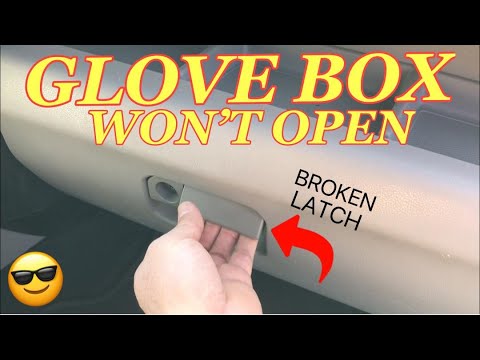
<p>A glove box that will not open is more than a minor annoyance—it usually holds your registration, insurance card, and the small tools you need for other repairs. On a high-mileage vehicle, the cause is almost always worn plastic, dried lubricant, or a misaligned striker rather than a serious mechanical failure. Most stuck latches can be diagnosed and freed in under an hour with basic hand tools, and identifying the exact failure point is what keeps you from cracking the door or snapping the handle.</p>
<h2>Why Glove Box Latches Fail on High-Mileage Vehicles</h2>
<p>The latch is a small plastic assembly that endures thousands of open-and-close cycles plus years of heat, cold, and UV exposure. Several failure modes stack up over time:</p>
<ul>
<li><strong>Plastic fatigue.</strong> Latch pawls, hinge arms, and release handles are typically ABS or polypropylene. After a decade of heat cycling, they become brittle and lose the tension needed to snap back into position.</li>
<li><strong>Dried or contaminated lubricant.</strong> Factory grease collects dust until it turns into a paste that binds the latch slider inside its track.</li>
<li><strong>Striker misalignment.</strong> Body flex, loose dash screws, and sagging hinges shift the door so the latch no longer lines up cleanly with the striker.</li>
<li><strong>Broken return spring.</strong> A snapped spring leaves the latch jammed in the engaged position even when the handle moves normally.</li>
<li><strong>Debris or spilled liquid.</strong> Sticky residue from a drink or a melted item effectively glues the door to its rubber seal.</li>
<li><strong>Failed damper or check strap.</strong> A worn air damper can hold the door shut under constant tension.</li>
</ul>
<p>On vehicles past 150,000 miles, plastic fatigue and dried lubricant account for the majority of cases.</p>
<h2>Diagnose the Failure Before You Force Anything</h2>
<p>Forcing the door is the fastest way to snap the handle or crack the trim panel. Work through these checks first:</p>
<ul>
<li><strong>Push in while pulling the release.</strong> Press the door inward about 5 mm, hold the release lever or button, then let the door swing. This unloads pressure on the latch and often pops it free.</li>
<li><strong>Confirm the lock is not engaged.</strong> Many glove boxes have a key cylinder or valet lock. Turn the key in both directions while holding the release.</li>
<li><strong>Listen and feel.</strong> A solid click means the latch works but the striker is stuck. A spongy, silent handle points to a broken spring or snapped cable.</li>
<li><strong>Check for a jammed object.</strong> A phone charger, sunglasses case, or owner's manual wedged against the latch will hold the door shut.</li>
<li><strong>Try the second latch.</strong> Dual-latch boxes frequently fail on only one side, which lets you open the door with a firm pull on the working side.</li>
<li><strong>Check the owner's manual.</strong> Some models hide an emergency release tab behind a trim plug or under the dash.</li>
</ul>
<h2>Common Fixes for a Stuck Latch</h2>
<h3>Handle moves but nothing happens</h3>
<ul>
<li>Remove the glove box side access panel or the lower dash trim to reach behind the door.</li>
<li>Push the latch arm directly with a plastic trim tool or a long screwdriver.</li>
<li>If the handle itself is cracked, replace the handle-and-latch assembly as one unit rather than trying to glue it.</li>
</ul>
<h3>Handle clicks but the door stays shut</h3>
<ul>
<li>The striker is misaligned. Loosen the striker screws slightly, close the door, and let the latch pull the striker into its natural position. Tighten the screws with the door open.</li>
<li>Inspect the hinge arms for cracks. Sagging hinges push the entire door out of alignment.</li>
</ul>
<h3>Everything feels stiff and slow</h3>
<ul>
<li>Clean the latch slider with isopropyl alcohol and a cotton swab.</li>
<li>Apply a dry PTFE or silicone lubricant. Avoid petroleum grease and general-purpose sprays, which attract dust and can attack certain plastics.</li>
<li>Work the latch 10 to 15 times to spread the lubricant through the mechanism.</li>
</ul>
<h3>Door is glued shut by residue</h3>
<ul>
<li>Slide a plastic trim card into the gap along the top edge and work it side to side to break the seal.</li>
<li>Once open, clean the seal and latch with warm soapy water and dry thoroughly.</li>
</ul>
<h2>Opening a Fully Jammed Glove Box Without Damage</h2>
<p>When the latch will not release from the outside, gain access from behind the door.</p>
<ul>
<li>Remove the lower dash or knee panel, or the glove box's side panel, to expose the latch assembly.</li>
<li>Unclip the damper arm or check strap. This alone frees a door being held shut under tension.</li>
<li>Reach through the gap and press the latch pawl away from the striker.</li>
<li>If there is no access, remove the glove box hinge screws from underneath. Most doors are held by only two to four screws.</li>
<li>Last resort: cut a small access hole in the back of the box, release the latch, then seal the hole with a plastic patch. It is invisible once the door closes.</li>
</ul>
<p>Practical tips for the job:</p>
<ul>
<li>Photograph the latch assembly before disassembly for reassembly reference.</li>
<li>Work in a warm space—cold plastic cracks far more easily than warm plastic.</li>
<li>Use plastic trim tools instead of flathead screwdrivers to avoid gouging panels.</li>
<li>Disconnect the battery if the glove box houses wiring or a fuse panel.</li>
<li>To prevent a repeat, keep the box lightly loaded, avoid stuffing it past the latch line, and lubricate the latch once a year with a dry product.</li>
</ul>
<h2>Conclusion</h2>
<p>Most stuck glove box latches on high-mileage vehicles trace back to worn plastic, dried lubricant, or a misaligned striker—all repairable without a dealer visit. Diagnose before you force anything, clean and lubricate with a dry product, and keep the box from being overstuffed. If the latch assembly is cracked, replace it as a complete unit; the part is inexpensive, and the job takes only minutes once the door is open.</p>