<p>Power seats in a Sprinter camper van are more than a luxury. They let drivers and passengers find a comfortable position on long trips, and they can make a compact living space easier to use. The power seat switch is the primary interface between the user and the seat's electric motors. When it fails, the seat may stop moving in one direction, move intermittently, or not respond at all. Understanding how the switch works—mechanically and electrically—makes diagnosis faster and helps prevent conversion-related wiring problems.</p>
<h2>How the Switch Controls Seat Movement</h2>
<p>The power seat switch is usually a multi-directional rocker or joystick-style unit mounted on the side of the seat base. In a Sprinter camper van, it may be a factory Mercedes-Benz switch or an aftermarket panel installed with replacement seats.</p>
<ul>
<li><strong>Fore/aft control:</strong> Moves the entire seat forward and backward on its tracks.</li>
<li><strong>Height control:</strong> Raises or lowers the front, rear, or entire seat cushion.</li>
<li><strong>Tilt control:</strong> Adjusts the angle of the seat cushion.</li>
<li><strong>Recline control:</strong> Changes the backrest angle.</li>
<li><strong>Memory controls (if equipped):</strong> Store and recall preset positions.</li>
</ul>
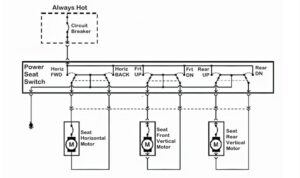
<p>Each switch position corresponds to a specific motor or motor direction. A simple rocker switch contains a set of movable contacts. When you press the switch, a plastic actuator bridges or separates those contacts. That action sends electrical current to the correct motor. In more advanced factory systems, the switch does not drive the motors directly. Instead, it sends low-current signals to a seat control module, which then operates the motors through relays or solid-state drivers.</p>
<p>The feel of the switch matters. A worn switch may still click but fail to make reliable contact. A switch that feels loose or gritty may have broken internal plastic parts.</p>
<h2>Electrical Path and Components</h2>
<p>Most power seat systems use a reversible DC motor for each adjustment function. A reversible motor has two wires. To move the motor one way, the circuit applies positive voltage to one wire and ground to the other. To reverse direction, it swaps polarity.</p>
<ul>
<li><strong>Direct-drive switch:</strong> The switch carries full motor current. It uses multiple contact sets to reverse polarity. This design is common in older vehicles and many aftermarket seats.</li>
<li><strong>Relay or module-driven switch:</strong> The switch only carries a small control signal. The control module or relays handle the high current. This design is common in late-model Sprinters with memory seats.</li>
<li><strong>Power source:</strong> The seat system usually receives constant 12V power through a dedicated fuse. Ground is provided through a chassis or harness ground.</li>
<li><strong>Protection:</strong> Fuses, circuit breakers, or thermal overloads protect the wiring and motors from overload.</li>
</ul>
<p>In a camper van, wiring routing is critical. The seat harness often passes near or through a swivel base. Every time the seat rotates, the harness can flex, rub, or stretch. Without a service loop and proper strain relief, wires can break inside their insulation. That break may mimic a failed switch.</p>
<h2>Common Failure Points and Symptoms</h2>
<p>Power seat problems are rarely random. They usually trace to one of a few areas.</p>
<ul>
<li><strong>Switch contacts:</strong> Carbon buildup, pitting, or broken plastic can cause intermittent operation or failure in one direction.</li>
<li><strong>Connectors:</strong> Loose pins, corrosion, or pushed-out terminals interrupt power or signals.</li>
<li><strong>Harness damage:</strong> Broken wires at the swivel base, seat frame, or under-seat connector are common in camper conversions.</li>
<li><strong>Fuses and relays:</strong> A blown fuse or failed relay stops all movement or one function.</li>
<li><strong>Motors:</strong> A seized or worn motor may draw high current, blow a fuse, or run slowly.</li>
<li><strong>Control module:</strong> Memory seat modules can fail, causing no response or erratic movement.</li>
<li><strong>Swivel base interference:</strong> Cables pinched during rotation can short or break.</li>
</ul>
<p>Symptoms help narrow the cause. If only one direction fails, the switch or that motor circuit is suspect. If all functions fail, check power, ground, and fuses first. If the switch clicks but nothing happens, test the motor and module.</p>
<h2>Testing and Practical Tips</h2>
<p>Work systematically. Start with the simplest checks and move toward component-level testing.</p>
<ul>
<li><strong>Disconnect the battery</strong> before working on seat wiring. Sprinters may have side airbags and occupancy sensors in the seats. Wait at least 10 minutes after disconnecting the battery before unplugging seat connectors.</li>
<li><strong>Check the fuse</strong> for the power seat circuit. Replace it only with the correct rating.</li>
<li><strong>Inspect the harness</strong> at the swivel base, under the seat, and at the switch. Look for chafed insulation, pinched wires, or loose connectors.</li>
<li><strong>Test power and ground</strong> at the switch connector with a multimeter. No power means a fuse, relay, or wiring fault upstream.</li>
<li><strong>Test switch continuity.</strong> With the switch unplugged, use a wiring diagram to identify common and direction pins. Continuity should change only when the switch is pressed in the corresponding direction.</li>
<li><strong>Bypass the switch.</strong> Apply 12V and ground directly to the motor terminals. If the motor runs, the switch or module is faulty. If it does not, test the motor and its wiring.</li>
<li><strong>Clean or replace the switch.</strong> Electrical contact cleaner may restore a dirty switch. Replacement is usually more reliable than repair.</li>
<li><strong>Add strain relief</strong> for camper van swivel seats. Leave a service loop so the harness can rotate without tension.</li>
<li><strong>Use dielectric grease</strong> on clean connectors to resist moisture and corrosion.</li>
<li><strong>Secure all wiring</strong> with loom, clips, and grommets. Keep it away from seat rails and moving parts.</li>
</ul>
<p>For aftermarket seats, match the switch to the motor current draw. If the switch is not rated for the load, use a relay bank. This prevents burned contacts and melted connectors.</p>
<h2>Conclusion</h2>
<p>The power seat switch in a Sprinter camper van is either a direct reversing switch or a control input for a seat module. It manages polarity, current, and motor direction through mechanical contacts or electronic signals. Most failures come from worn contacts, damaged harnesses, loose connectors, or swivel-base stress. By checking power, ground, switch continuity, and motor operation in order, you can isolate the fault quickly. With proper strain relief, clean connections, and correct current ratings, the power seat system can remain reliable through years of camper van travel.</p>