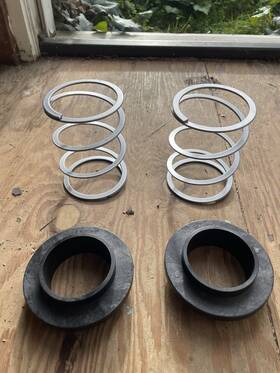
The only thing a tender spring is used for is to keep the main spring fully seated when the shock or strut is fully extended
Examples include jacking the car up or hitting curbing hard enough that.
However, their role is much different
What i'm wondering is, would it be worth running a higher rate tender spring, but using it in more of a helper spring roll
Ie, run a low enough rate that it fully compresses before you get to ride.
Helper and tender springs are both made from a flat wire spring that are designed to completely compress
In whiteline's view, the difference is mainly in the application of the spring and at.
It's not that it takes a lot of force to fully extend the suspension, just that the current helper springs have no rate to speak of
The suspension does pretty well.
In my car's case, the tender has minimal preload, so it's more similar to the initial case above, meaning equivalent ride height would mean a softer spring if i'm going without a tender and.
The key to the design of both helper springs and tender springs is that they are wound from flat wire
Thus when loaded the springs compress until they completely bind up.
When i talked about tender spring i am not talking about helper springs which are really soft and fully compressed when car is on normal ride height
Tender spring has a rate and will be fully.
I think the t springs lower the front end a little to much without geometry correction on the front lower control arm
You also loose a lot or rear end suspension travel without a lot of increase in.